
Infinity-Edge vs. Perimeter-Overflow Pools
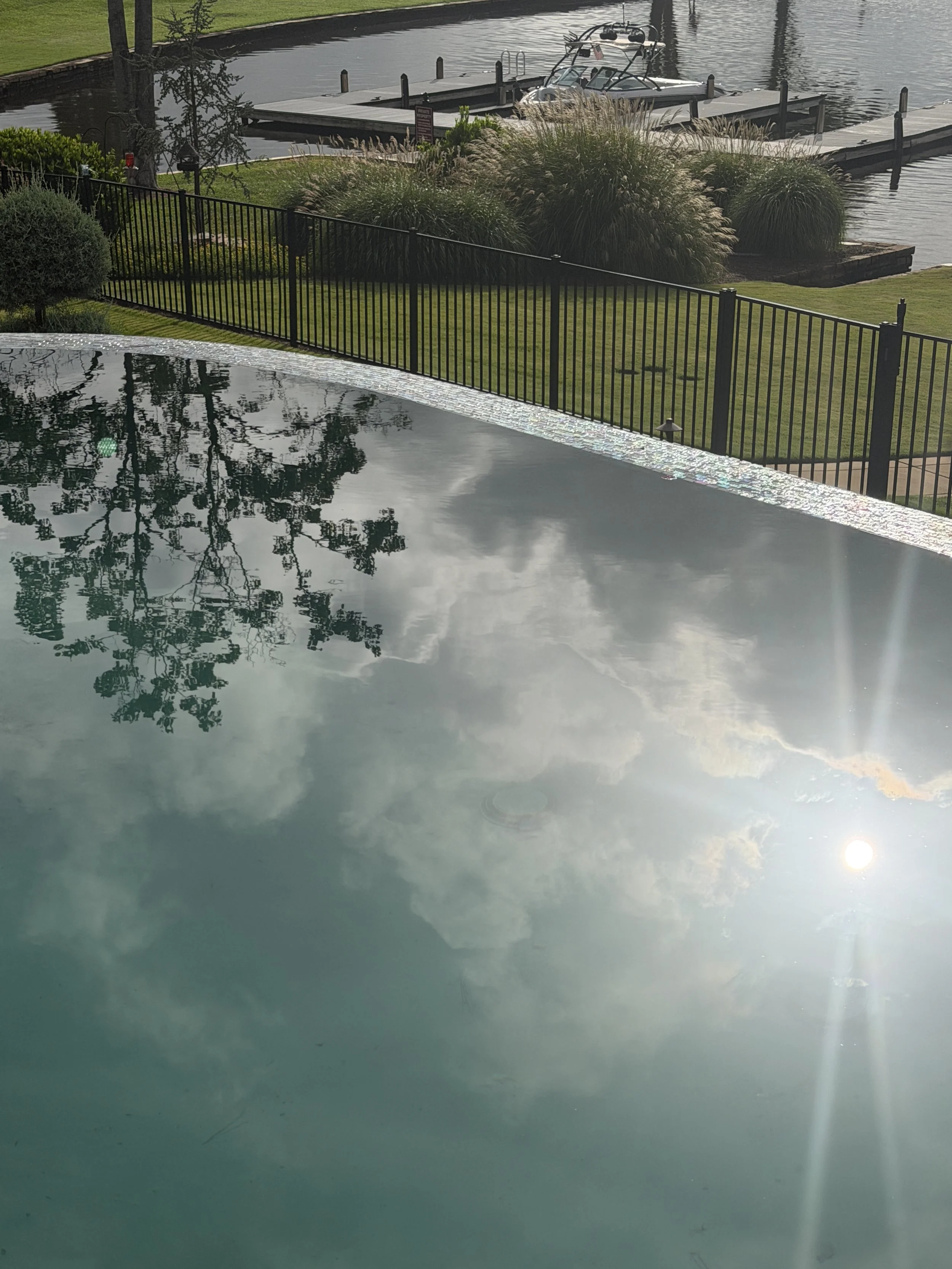
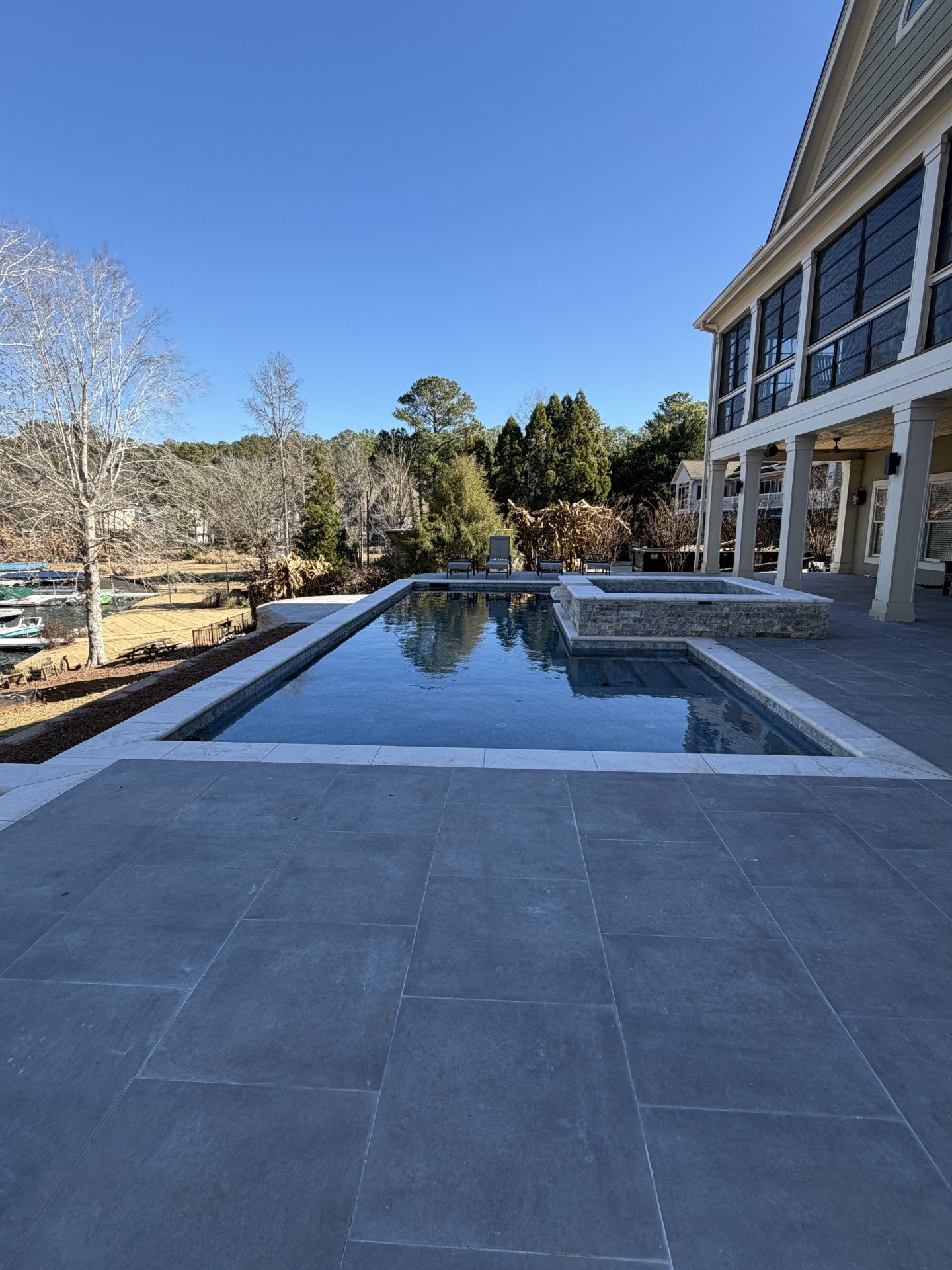
36’ glass infinity edge overlooking lake Oconee
Infinity-Edge vs. Perimeter-Overflow Pools: What’s the Difference?
Infinity-edge and perimeter-overflow pools are two of the most impressive options in luxury pool design. Both create the appearance of water flowing beyond the traditional boundaries of a swimming pool, but they accomplish that effect in very different ways.
An infinity-edge pool is designed to highlight a particular view by allowing water to flow over one or more exposed edges. A perimeter-overflow pool allows water to spill evenly around all or most of the pool’s perimeter, creating a smooth, mirror-like surface.
Both designs require specialized engineering, plumbing, waterproofing, and hydraulic planning. Understanding the differences will help you determine which one makes the most sense for your property, architecture, and overall backyard design.
What Is an Infinity-Edge Pool?
An infinity-edge pool, also called a vanishing-edge or negative-edge pool, allows water to flow over a lowered wall into a catch basin below. From the primary viewing area, the edge appears to disappear into the surrounding landscape.
The water collected in the basin is circulated through a dedicated plumbing system and returned to the pool.
Infinity-edge pools are especially effective on properties overlooking:
Lakes
Golf courses
Mountains
Wooded areas
Open fields
City skylines
Significant elevation changes
The purpose of an infinity edge is to frame and enhance a view. When designed correctly, the pool water appears to merge with the lake, horizon, or surrounding landscape.
How an Infinity-Edge System Works
An infinity-edge pool normally includes two connected water-holding structures:
The main swimming pool
The lower catch basin
Water is pushed toward the lowered edge of the main pool. It flows over the finished edge, travels down the exterior wall, and enters the catch basin. Pumps then return the collected water to the main pool.
The system must be designed to handle more than the normal operating water volume. It must also account for:
Swimmers entering the pool
Rainfall
Wind pushing water over the edge
Water displaced during operation
Water remaining inside the plumbing
Changes in the pool’s operating level
The size and depth of the catch basin cannot be based on appearance alone. It must be properly calculated for the pool, edge length, desired flow, and expected displacement.
What Is a Perimeter-Overflow Pool?
A perimeter-overflow pool allows water to flow over all or most sides of the pool into a concealed collection gutter. The water is then directed to a surge tank before being circulated back into the pool.
The finished water level is normally even with, or very close to, the surrounding patio. This creates a flat, reflective surface that resembles a sheet of glass.
Rather than directing attention toward a single view, a perimeter-overflow design makes the entire pool a visual centerpiece.
This style is often used for:
High-end residential properties
Modern architectural homes
Luxury resorts
Courtyard pools
Formal geometric pools
Sunken spas and entertainment areas
Properties where the pool must look impressive from several directions
How a Perimeter-Overflow System Works
A perimeter-overflow pool typically includes:
A precisely constructed pool beam
A continuous or partial overflow edge
A perimeter collection gutter
Drain lines connected to the gutter
A properly sized surge tank
Dedicated pumps and filtration
An automatic water-level management system
As swimmers enter the pool, displaced water flows over the edge and into the gutter. The gutter directs that water to the surge tank. The circulation system then returns the water to the pool.
The overflow edge must be extremely level. Even a small variation can cause one section to spill heavily while another section remains dry. Achieving an even sheet of water requires precise forming, shotcrete placement, edge preparation, waterproofing, tile installation, and hydraulic balancing.
The Main Visual Difference
The biggest difference between the two designs is where the water goes and what the homeowner sees.
Infinity-Edge Pool
Water flows over a selected edge into a visible or partially concealed catch basin below. The effect is directional and works best when aligned with a strong view.
Perimeter-Overflow Pool
Water flows around all or most of the pool into a hidden gutter. The effect can be appreciated from multiple directions and creates a more formal, mirror-like appearance.
An infinity edge connects the pool to the landscape. A perimeter overflow makes the water surface itself the main architectural feature.
Property and Elevation Requirements
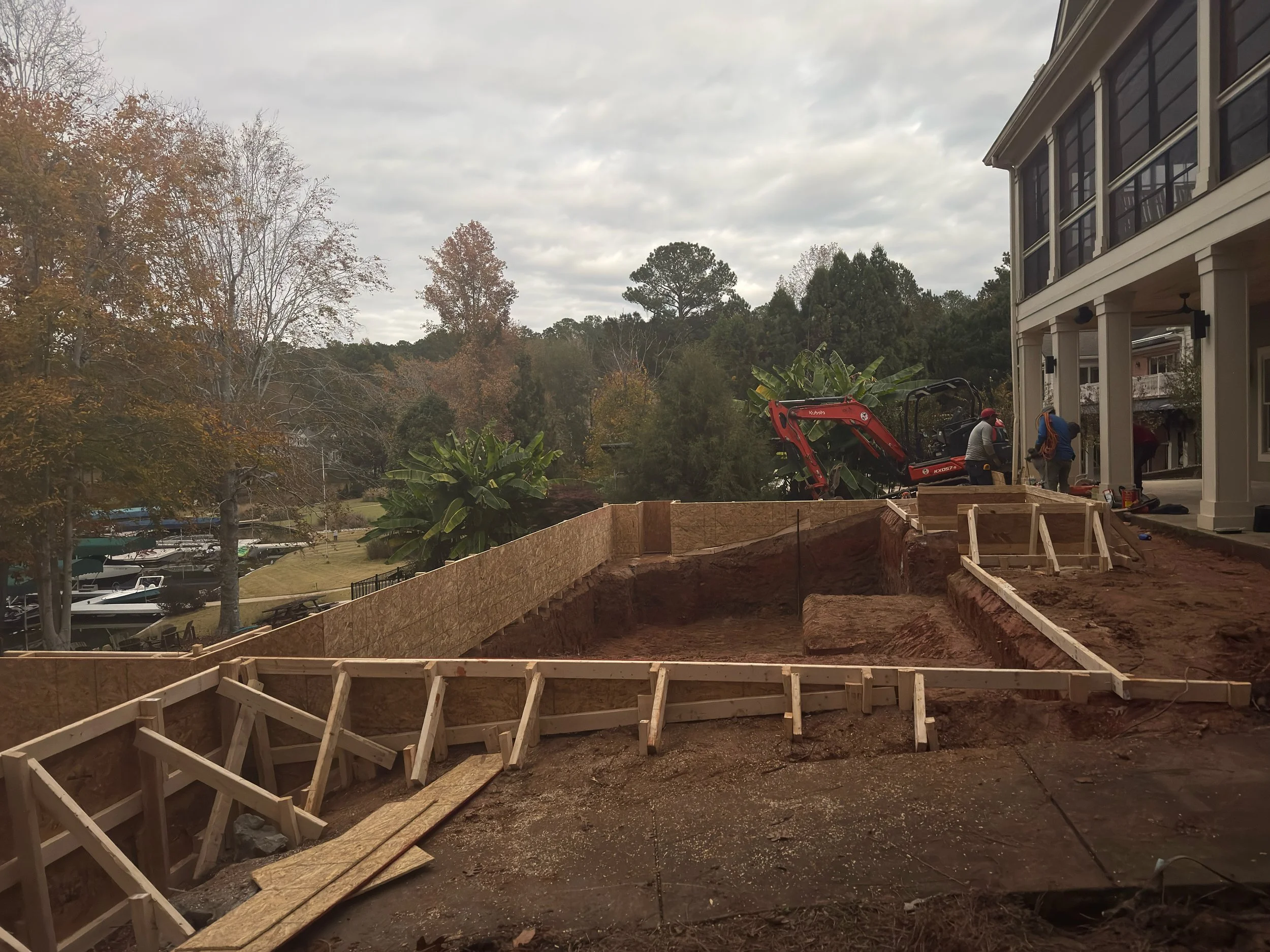
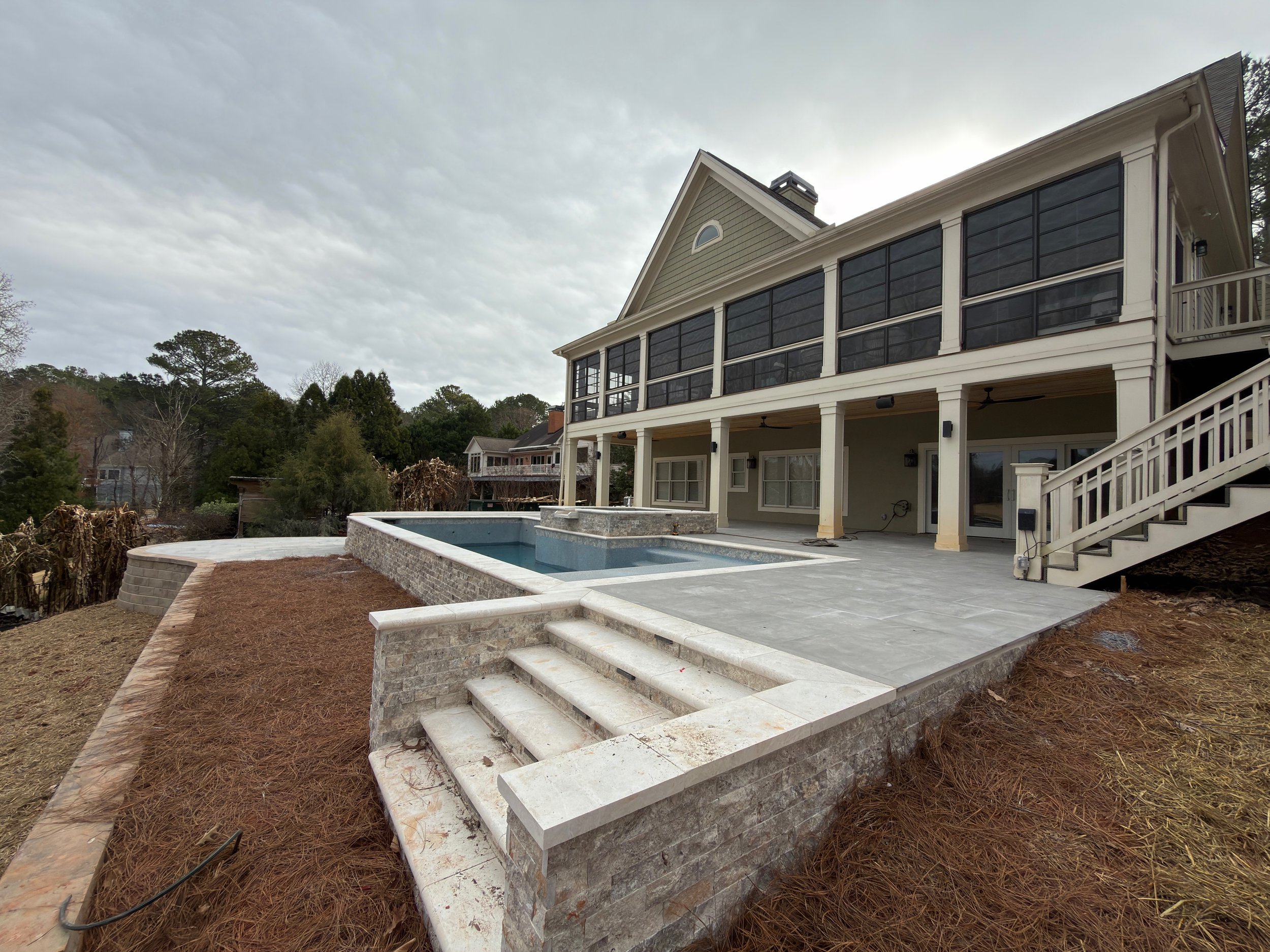
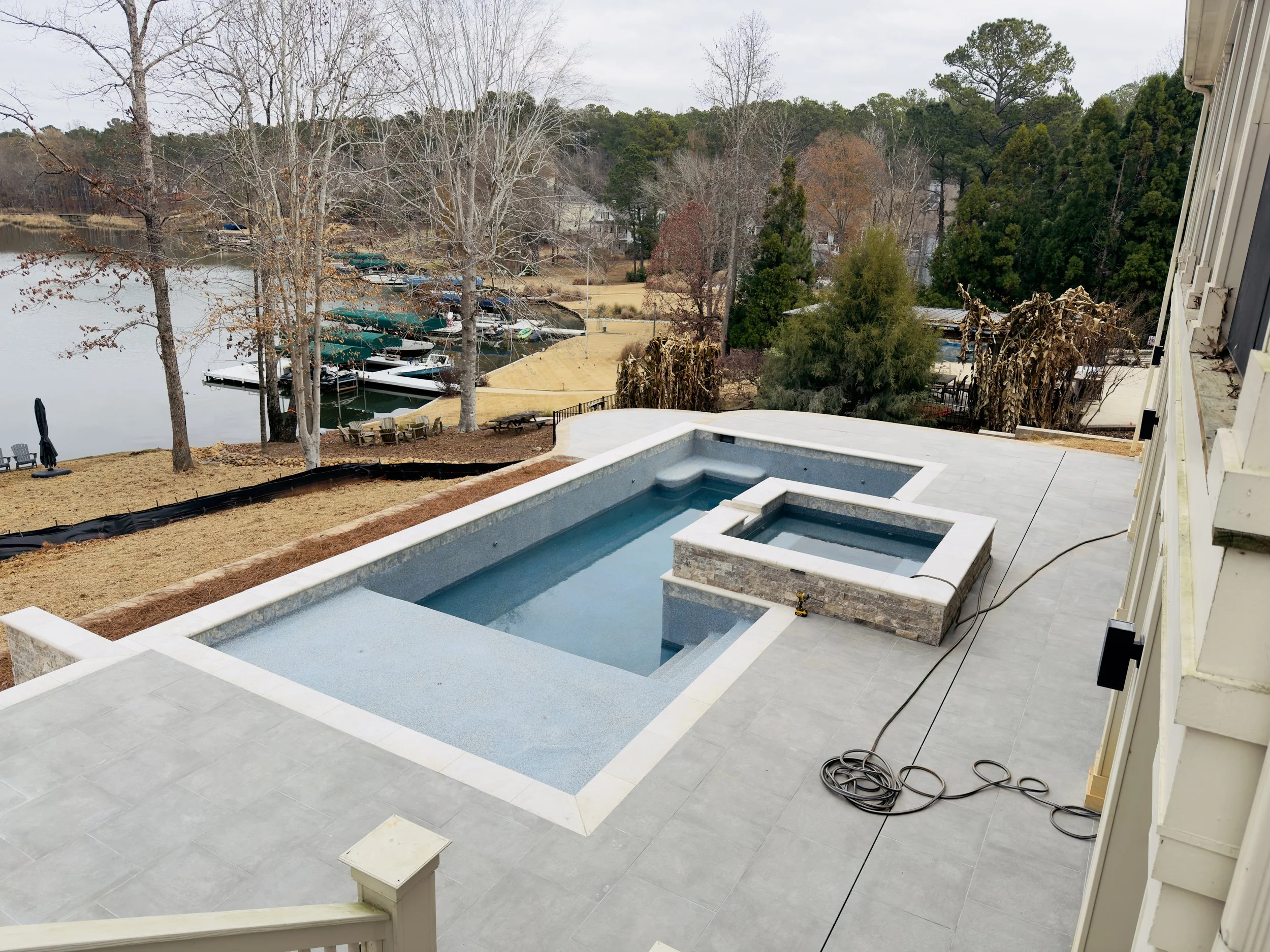
Infinity-edge pools usually work best on properties with natural elevation changes. A sloped or lakefront property can provide room for the exposed wall and lower catch basin while allowing the water to visually disappear into the distance.
This makes infinity-edge pools especially well suited for many Lake Oconee properties, where the pool can be positioned to complement the lake view.
Perimeter-overflow pools do not always require a steep property. However, they need enough space for the gutter, surge tank, plumbing, equipment, and access for future service.
Both designs require careful evaluation of:
Property elevations
Soil conditions
Groundwater
Drainage
Structural support
Equipment location
Utility access
Local setbacks
HOA requirements
Structural and Waterproofing Considerations
Standard swimming pools are designed to contain water within the pool shell. Overflow pools must also control water as it travels across edges, through gutters, down walls, and into separate basins or tanks.
Critical construction details include:
Reinforced structural steel
Properly designed shotcrete shells
Precise edge elevations
Waterproofed overflow surfaces
Correctly installed tile systems
Sealed penetrations and plumbing connections
Expansion and movement joints
Drainage behind exposed walls
Accessible plumbing and equipment
On an infinity-edge pool, the exterior spill wall becomes part of the water system. On a perimeter-overflow pool, the gutter and surge tank are just as important as the main pool.
These elements should be planned before construction begins. They are difficult and expensive to correct after the pool shell has been installed.
Plumbing and Equipment Differences
Overflow pools generally require more plumbing and equipment than conventional skimmer pools.
Depending on the design, the system may include:
Dedicated overflow pumps
Multiple variable-speed pumps
Separate filtration systems
Large-diameter plumbing
Surge or balance tanks
Automatic fill systems
Water-level sensors
Check valves and actuators
Additional drains and return lines
Advanced automation
The system must deliver enough water to create the desired overflow effect without excessive noise, turbulence, or energy use.
Larger overflow edges require more flow. Long plumbing runs, elevation changes, water features, spas, and sunken entertainment areas can also affect pump sizing and system design.
Simply installing a larger pump does not correct poorly designed plumbing. Pipe sizing, suction capacity, return placement, elevation, filtration, and total system resistance must all be considered together.
Maintenance Requirements
Both designs require more attention than a traditional skimmer pool because the overflow components are part of the circulation system.
Infinity-Edge Maintenance
Maintenance may include:
Cleaning the catch basin
Monitoring the basin water level
Removing leaves and debris
Inspecting the spill edge
Maintaining the exterior overflow wall
Checking dedicated pumps and drains
Perimeter-Overflow Maintenance
Maintenance may include:
Cleaning the perimeter gutter
Inspecting drain channels
Monitoring the surge tank
Maintaining water-level controls
Removing debris before it restricts flow
Inspecting the overflow tile and grout
Proper design makes maintenance manageable. Poor access to gutters, tanks, valves, or equipment can turn routine service into a major inconvenience.
Which Design Costs More?
Both are premium custom pool systems, and both normally cost more than a traditional skimmer pool.
The final investment depends on:
Pool size and shape
Total length of the overflow edge
Catch basin or surge-tank capacity
Structural engineering
Site access and elevation
Retaining walls
Plumbing size and quantity
Number of pumps and filters
Waterproofing requirements
Tile and finish selections
Automation and water-level controls
A perimeter-overflow pool is often more complex because the entire pool elevation must be extremely precise and the water must be collected around multiple sides.
However, a large infinity-edge pool built on a steep property can also require extensive engineering, structural walls, foundations, and site work.
The design should be priced based on the complete system, not just the visible edge.
Which Pool Design Is Right for Your Property?
Choose an Infinity-Edge Pool If:
Your property has a lake, golf course, or long-distance view
The yard has a natural slope or elevation change
You want the pool to visually connect with the landscape
One primary viewing direction is most important
You want an exposed spill wall as a design feature
Choose a Perimeter-Overflow Pool If:
You want a modern, high-end architectural appearance
The pool will be viewed from several directions
You prefer a flat, mirror-like water surface
The patio and waterline should appear nearly level
You are designing a courtyard, sunken spa, or entertainment-focused pool
Why Experience Matters with Overflow Pools
Infinity-edge and perimeter-overflow pools are not standard pool builds with upgraded tile. They are complete hydraulic and structural systems that require coordination between design, engineering, excavation, steel, plumbing, shotcrete, waterproofing, masonry, electrical, and equipment installation.
Small mistakes can cause major performance issues, including:
Uneven water flow
Dry sections along the overflow edge
Excessive water loss
Undersized catch basins or surge tanks
Pumps pulling air
Difficult maintenance access
Leaks around gutters or penetrations
Excessive operating noise
Unnecessary energy consumption
The finished pool may look simple, but the system behind it is highly detailed.
Build a Luxury Overflow Pool with Dreamscape Outdoors
Dreamscape Outdoors designs and builds custom shotcrete pools, infinity-edge pools, perimeter-overflow systems, integrated spas, and complete outdoor living spaces throughout Georgia.
We understand that advanced pool construction requires more than a beautiful rendering. It requires accurate elevations, structural planning, properly sized plumbing, dependable equipment, professional waterproofing, and careful coordination from the first design meeting through final startup.
We serve homeowners throughout Lake Oconee, Greensboro, Madison, Athens, Watkinsville, Monroe, Loganville, Social Circle, and surrounding Georgia communities.
If you are considering an infinity-edge or perimeter-overflow pool, contact Dreamscape Outdoors to schedule an on-site consultation and determine which design is best suited for your property.
Dreamscape Outdoors LLC
210 S. Broad Street
Monroe, Georgia 30655
770-685-9655
dreamscapeoutdoorsga@gmail.com
dreamscapeoutdoorsga.com
Best Pool Decking Options for Georgia Backyards
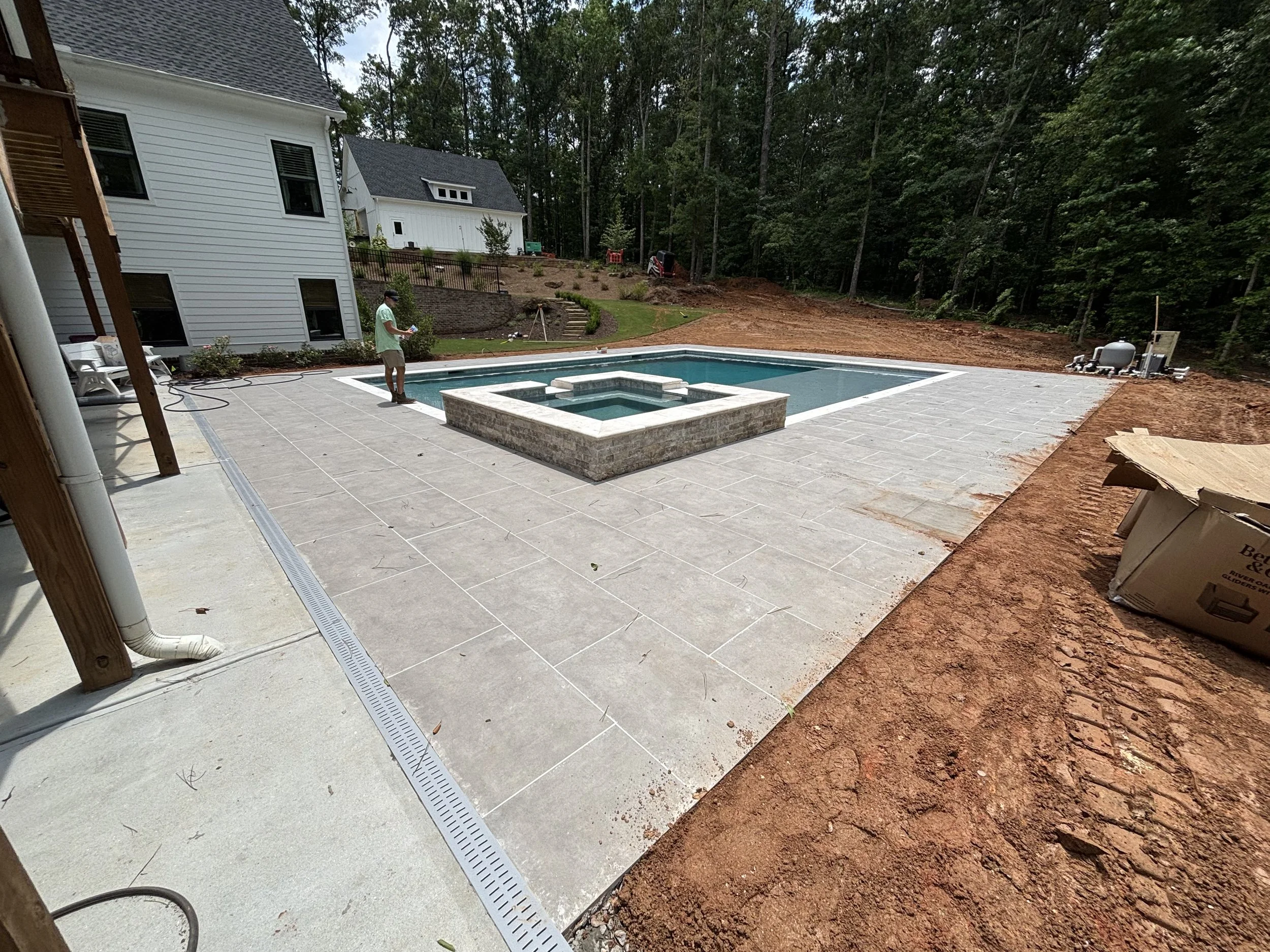
24×36 sandstone grey porcelain pavers
Best Pool Decking for Georgia Backyards: Concrete, Travertine, Marble, or Porcelain?
Choosing the right pool decking is one of the most important decisions you will make when designing a custom swimming pool. The decking affects how your backyard looks, how comfortable it feels underfoot, how much maintenance it requires, and how well the entire outdoor space performs over time.
Georgia’s intense summer heat, red clay soil, heavy rain, and changing seasonal temperatures make material selection especially important. A pool deck needs to handle moisture, movement, heat, and regular use without becoming unsafe or difficult to maintain.
Four of the most popular pool decking options in Georgia are broom-finished concrete, travertine, marble, and porcelain pavers. Each material offers different advantages, appearances, and price points.
Here is what Georgia homeowners should consider before making a final selection.
Broom-Finished Concrete Pool Decking
Broom-finished concrete remains one of the most practical and affordable choices for a pool patio. After the concrete is poured, a broom is pulled across the surface to create a lightly textured finish that improves traction.
Advantages of Broom-Finished Concrete
More affordable than most natural stone or porcelain options
Clean and simple appearance
Can be formed around almost any pool shape
Textured surface provides better traction
Easy to add additional patio space
Can be upgraded later with a decorative coating
Concrete is a strong choice for homeowners who want a functional pool deck while keeping the overall project within a certain budget. It also works well when a large amount of patio space is needed for lounge chairs, dining areas, and entertaining.
Things to Consider
Concrete can develop hairline cracks as the ground moves and temperatures change. Proper site preparation, reinforcement, drainage, control joints, and expansion joints can help manage cracking, but no concrete installer can guarantee that concrete will never crack.
Standard concrete can also become hot during the Georgia summer. A textured deck coating can be applied to improve its appearance, comfort, and slip resistance.
Cool Deck and Textured Concrete Coatings
A decorative textured coating can be installed over properly prepared concrete to create a more finished appearance. These coatings are available in multiple colors and patterns and are commonly selected in lighter colors to reduce surface heat.
A textured coating can provide:
A more decorative appearance than plain concrete
Improved traction around the pool
A more comfortable walking surface
Multiple color options
The ability to refresh an older concrete patio
This is a good middle-ground option for homeowners who want more than broom-finished concrete but do not want the investment associated with premium pavers.
Like any applied finish, the coating may eventually require cleaning, touch-ups, or recoating depending on its age, use, and exposure.
Travertine Pool Decking
Travertine has been a popular pool decking material for years because of its natural appearance and comfortable feel. It works especially well with traditional homes, natural landscapes, and resort-style pool designs.
Travertine is available in several colors, patterns, textures, and sizes. It can be used for the entire pool patio or paired with matching travertine coping.
Advantages of Travertine
Natural, high-end appearance
Generally comfortable underfoot in lighter colors
Available in multiple sizes and patterns
Individual pavers can be replaced if damaged
Works well with pools, spas, fire features, and outdoor kitchens
Provides a timeless resort-style look
Travertine can create a smooth transition between the pool and the surrounding landscape. Its natural color variations also help hide dirt and minor surface wear.
Things to Consider
Because travertine is a natural stone, it is porous and can absorb moisture. Proper installation, drainage, joint preparation, and periodic sealing may be recommended depending on the selected material and finish.
Quality can also vary significantly. Homeowners should compare the density, thickness, finish, and consistency of the stone rather than choosing travertine based only on price.
Marble Pool Decking and Coping
Marble provides a refined, luxury appearance and is frequently used on high-end custom pools. It is especially popular for pool coping, although it can also be installed across the entire patio.
Popular marble selections offer soft gray, cream, white, and beige tones that complement modern homes, lakefront properties, and upscale outdoor living spaces.
Advantages of Marble
Premium luxury appearance
Natural color and veining
Available for both coping and patio pavers
Works well with glass tile and pebble pool finishes
Creates a clean, finished transition around the pool
Lighter selections can remain more comfortable than darker materials
Leathered or textured marble finishes are generally better suited for pool environments than highly polished finishes because they provide additional traction.
Things to Consider
Marble is a premium material and normally requires a larger investment than concrete or many travertine selections. Because it is natural stone, colors and patterns will vary from piece to piece.
Proper sealing and ongoing care can help protect the material from staining and weather exposure. The correct installation base, drainage, edge restraint, and joint treatment are also critical to long-term performance.
Porcelain Pool Pavers
Porcelain pavers have become one of the most requested materials for modern custom pools. They provide a clean architectural appearance while offering a wide selection of colors, sizes, textures, and patterns.
Porcelain can resemble natural stone, wood, concrete, or other premium materials without some of the variation and maintenance associated with natural stone.
Advantages of Porcelain Pavers
Modern, high-end appearance
Consistent color and sizing
Low moisture absorption
Resistant to staining and fading
Available in large-format sizes
Easier routine maintenance
Excellent for modern pools and outdoor living spaces
Porcelain works particularly well for geometric pools, raised spas, outdoor kitchens, and contemporary homes. Large-format porcelain pavers can make a patio appear larger and create a clean, seamless design.
Things to Consider
Not every porcelain product is approved for outdoor pool use. The selected paver should be rated for exterior installation and have an appropriate slip-resistant finish.
Porcelain also requires experienced installation. Base preparation, drainage, cutting, edge support, and joint spacing all affect the finished product. Darker porcelain colors may become hot in direct sunlight, so color selection matters in full-sun areas.
Comparing the Four Pool Decking Options
Choose Broom-Finished Concrete If:
Budget is a major consideration
You need a large amount of patio space
You prefer a clean and simple appearance
You may want to add a textured coating later
Choose Travertine If:
You want a natural, resort-style backyard
You prefer warmer earth tones
Comfort underfoot is important
You want the ability to replace individual pavers
Choose Marble If:
You want a premium luxury appearance
You prefer lighter gray, cream, or white tones
You want matching coping and patio materials
Natural stone variation fits your design
Choose Porcelain If:
You want a modern, architectural look
Low maintenance is a priority
You prefer consistent colors and patterns
You want large-format pavers or a highly customized design
Do Not Choose Pool Decking Based on Appearance Alone
The best-looking material is not always the best material for every property. Before selecting pool decking, consider:
How much direct sunlight the patio receives
The style and color of the house
The pool’s shape and finish selections
Drainage and elevation changes
Expected foot traffic
Outdoor furniture and entertainment areas
Maintenance preferences
Overall project budget
Coping, waterline tile, interior pool finish, decking, retaining walls, and landscaping should all work together. Selecting each item separately without considering the complete design can result in a backyard that feels disconnected.
Proper Installation Matters as Much as the Material
Even the best pool decking can fail if the base, drainage, or installation method is incorrect.
A professionally installed pool patio should account for:
Proper grading away from structures
Deck and channel drainage
Compacted base materials
Expansion and control joints
Movement between the pool shell and patio
Correct edge restraints
Water runoff from surrounding areas
Georgia’s soil and weather conditions
These details may not be the most exciting part of choosing a pool deck, but they directly affect how the patio performs over time.
What Is the Best Pool Decking for Georgia?
There is no single material that is best for every homeowner.
Broom-finished concrete offers strong value and flexibility. Travertine provides a timeless, natural appearance. Marble delivers a refined luxury finish. Porcelain offers a modern look with consistent sizing and lower moisture absorption.
The right choice depends on your property, budget, design preferences, and how you plan to use the space.
Design Your Complete Backyard with Dreamscape Outdoors
Dreamscape Outdoors designs and builds custom pools, spas, patios, and complete outdoor living environments throughout Monroe, Loganville, Social Circle, Athens, Watkinsville, Madison, Greensboro, Lake Oconee, and surrounding Georgia communities.
We help homeowners compare materials, coordinate colors and finishes, and select a pool decking system that complements the home while performing well in Georgia conditions.
If you are considering a custom pool or complete backyard transformation, contact Dreamscape Outdoors to schedule an on-site consultation.
Dreamscape Outdoors LLC
210 S. Broad Street
Monroe, Georgia 30655
770-685-9655
dreamscapeoutdoorsga@gmail.com
dreamscapeoutdoorsga.com
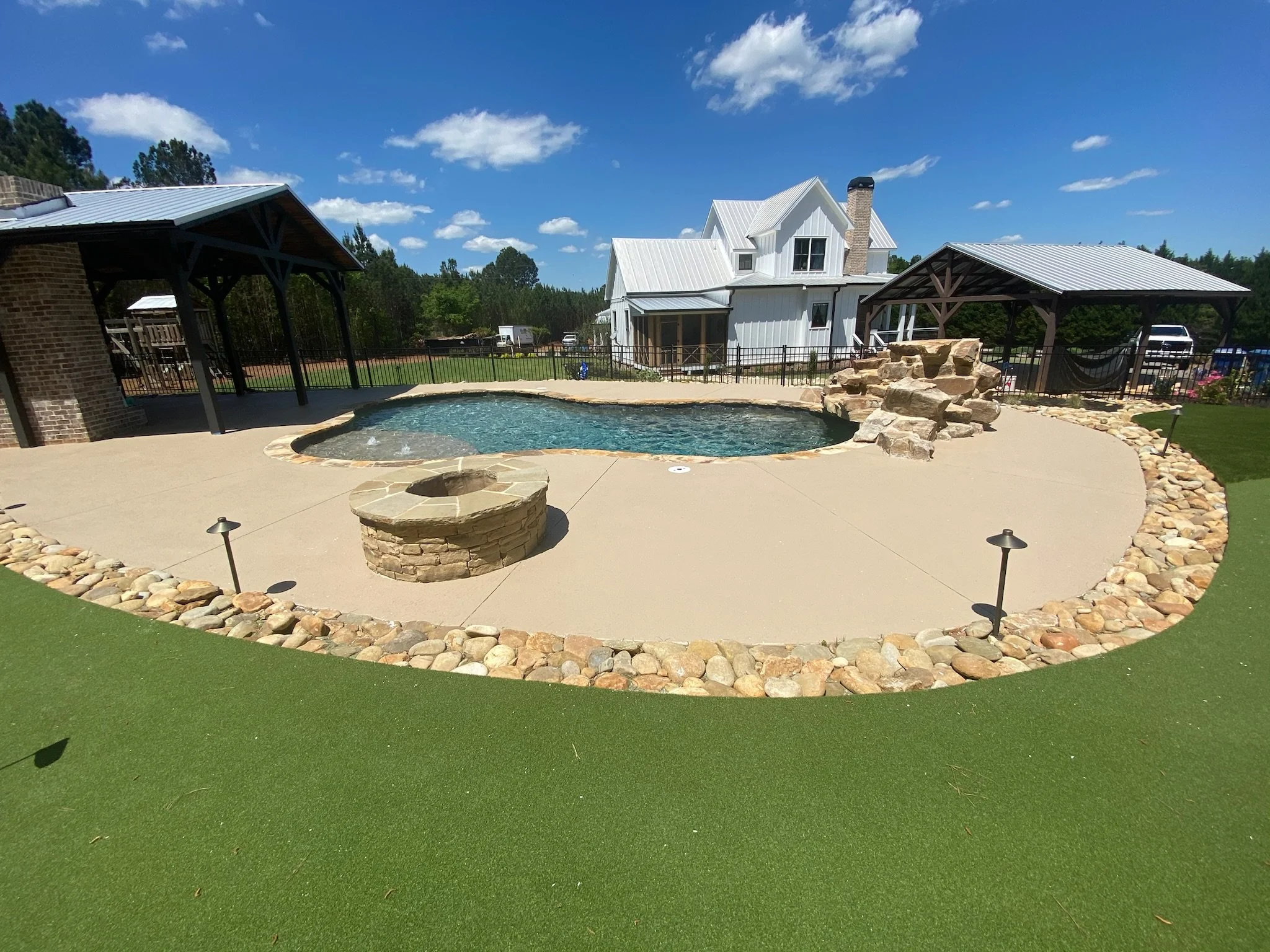
The Custom Pool Construction Process in Georgia: A Step-by-Step Timeline
Wondering how long it takes to build a custom pool in Georgia? See a full step-by-step breakdown of the pool construction process and timeline.
One of the biggest concerns homeowners have before building a pool is uncertainty:
How long will it take?
What happens first?
Why do some pools take longer than others?
Understanding the custom pool construction process in Georgia helps eliminate surprises, delays, and frustration.
Below is a realistic, step-by-step breakdown of what to expect when building a custom shotcrete pool — from design to your first swim.
Step 1: Initial Consultation & Site Evaluation (1–2 Weeks)
Every successful pool project starts with proper planning.
During this phase, your builder should:
Walk the property
Evaluate slope, soil, drainage, and access
Discuss design goals and budget
Identify potential challenges early
This step is critical in Georgia due to clay soil, elevation changes, and drainage requirements.
Step 2: Custom Pool Design & Planning (2–4 Weeks)
Once the site is evaluated, the design phase begins.
This includes:
Pool size, shape, and depth
Spa integration (if applicable)
Tanning ledges, steps, benches
Material selections (coping, decking, finishes)
Equipment and automation planning
A strong design phase prevents costly changes during construction.
Step 3: Permits & HOA Approvals (2–4 Weeks)
Before construction begins, approvals are required.
Depending on your location in Georgia, this may involve:
County or city permits
HOA or architectural review board approvals
Engineering documentation (if required)
Experienced builders handle this process to keep projects moving forward.
Step 4: Excavation & Layout (1 Week)
This is when the project becomes real.
What happens:
Pool layout is marked on-site
Excavation begins
Soil conditions are verified
Elevation and drainage are confirmed
Unexpected soil or rock conditions can affect timelines, which is why proper planning matters.
Step 5: Steel Reinforcement & Plumbing (1–2 Weeks)
This phase forms the structural backbone of your pool.
Includes:
Steel rebar installation
Structural reinforcement
Plumbing lines for pool, spa, and features
Pressure testing
A properly reinforced pool shell is essential for long-term durability.
Step 6: Shotcrete Application (1 Day + Cure Time)
Shotcrete is applied to form the pool shell.
Important notes:
This is a single-day process
Proper curing is critical
The pool gains strength over time
Rushing this step can compromise the entire structure.
Step 7: Tile, Coping & Hardscape (2–3 Weeks)
Now the pool starts to look finished.
This phase includes:
Waterline tile installation
Coping installation
Decking or pavers
Retaining walls (if needed)
Quality craftsmanship here affects both appearance and longevity.
Step 8: Equipment Set & Interior Finish (1–2 Weeks)
The final construction steps include:
Setting pumps, filters, heaters, and automation
Applying the interior pool finish
Filling the pool with water
Initial system startup
This is when your pool becomes fully operational.
Step 9: Startup, Walkthrough & Orientation (1 Week)
Before handoff, your builder should:
Balance water chemistry
Test all equipment
Walk you through operation and maintenance
Answer questions about care and warranties
This ensures you’re confident using your pool from day one.
Total Timeline: What’s Realistic?
For most custom pools in Georgia, a realistic timeline is:
Design & approvals: 4–8 weeks
Construction: 10–14 weeks
Total: ~14–22 weeks from start to finish
Weather, inspections, custom features, and site conditions can affect timing — transparency is key.
Why Timelines Vary Between Pool Builders
Long delays often result from:
Poor planning
Inexperienced crews
Permit issues
Inadequate communication
A professional builder sets expectations before construction begins, not after delays occur.
Why Homeowners Trust Dreamscape Outdoors
At Dreamscape Outdoors, we:
Plan thoroughly before breaking ground
Design for Georgia conditions
Communicate clearly throughout the build
Focus on long-term performance and quality
Our goal is not just to build pools — it’s to build them the right way.
Ready to Start the Process?
If you’re considering a custom pool and want to understand real timelines, real costs, and real expectations, the first step is a professional consultation.
👉 Schedule a custom pool consultation today
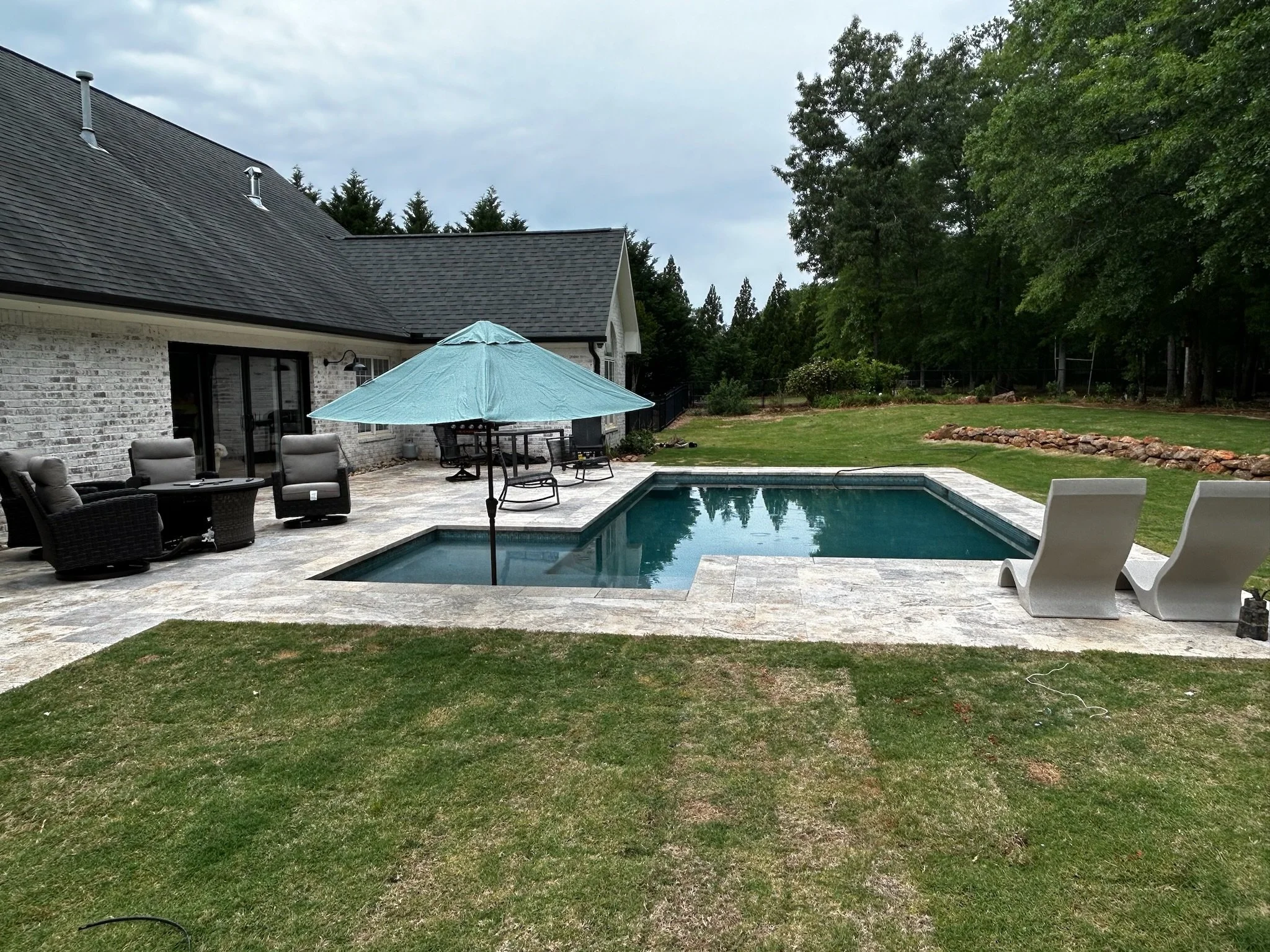
Top Custom Pool Design Trends in Georgia for 2026
Discover the top custom pool design trends in Georgia for 2026. Learn what features add value, what to avoid, and how to design a pool that lasts.
Pool design in Georgia has evolved well beyond basic rectangles and standard finishes. In 2026, homeowners are prioritizing intentional design, long-term durability, and resort-level aesthetics that complement both their homes and outdoor lifestyles.
If you’re planning a custom pool in Georgia, these are the top design trends shaping high-quality builds this year — and which ones actually add value.
1. Clean, Modern Pool Shapes
While freeform pools still have their place, clean-lined, architectural designs are dominating new builds in Georgia.
Popular styles include:
Rectangular and geometric pools
Long, narrow pools that emphasize views
Minimalist step and bench layouts
Sharp, defined edges with premium coping
These designs pair especially well with modern homes and lakefront properties.
2. Integrated Spas That Feel Seamless
In 2026, spas are no longer an afterthought — they’re fully integrated into the pool design.
Trending spa features:
Flush or subtly raised spas
Clean spillover details
Glass or porcelain tile finishes
Minimal coping for a sleek appearance
The goal is for the spa to feel designed with the pool, not added on later.
3. Premium Decking Materials
Standard concrete is being replaced with higher-end materials that offer better durability and aesthetics.
Top decking choices in Georgia:
Large-format porcelain pavers
Marble and limestone coping
Travertine in lighter, heat-resistant tones
Clean grout lines and modern patterns
These materials not only look better — they perform better in Georgia heat.
4. Resort-Style Water Features (Used Sparingly)
Homeowners are choosing fewer, more intentional water features rather than overwhelming designs.
Popular options:
Sheer descents integrated into raised walls
Subtle scuppers
Visual-edge or infinity-style effects
Bubblers on tanning ledges
Less noise. More elegance.
5. Fire & Water Combinations
Fire features continue to be a major trend, especially for evening use and entertaining.
Most requested fire elements:
Fire bowls integrated into raised walls
Linear fire features aligned with pool edges
Designs that frame views rather than block them
When paired correctly, fire and water create a dramatic but refined outdoor experience.
6. Tanning Ledges with Purpose
Tanning ledges remain popular, but the design approach has matured.
2026 trends include:
Clearly defined ledges
Fewer chairs, more open space
Integrated bubblers with subtle lighting
Placement that doesn’t interrupt swim space
Function and balance matter more than size.
7. Smarter Automation & Lighting
Technology is becoming more intuitive — and less visible.
Top automation trends:
App-based control systems
Color-changing LED lighting with preset scenes
Simple interfaces instead of complex panels
Integrated spa, pool, and lighting control
The focus is on ease of use, not gadgets.
8. Designs That Embrace the Property
One of the biggest trends in Georgia pool design is working with the land, not against it.
This includes:
Multi-level patios
Pools positioned to highlight views
Retaining walls designed as architectural features
Intentional transitions between pool and landscape
The best pools feel like they belong on the property.
Trends to Be Careful With
Not every trend ages well.
Be cautious with:
Overly dark finishes that show wear
Excessive water features that increase maintenance
Trend-driven designs without long-term appeal
Sacrificing structure for aesthetics
Good design should look great 10–20 years from now, not just on social media.
Why Design Experience Matters
A well-designed pool:
Costs less to maintain
Performs better long-term
Enhances property value
Feels intentional and balanced
Design is not just about looks — it’s about how everything works together.
Why Homeowners Trust Dreamscape Outdoors
At Dreamscape Outdoors, we design pools that:
Fit Georgia properties and soil conditions
Use premium, proven materials
Balance aesthetics with performance
Reflect how homeowners actually live and entertain
We don’t chase trends — we design pools that last.
Thinking About a Custom Pool in 2026?
If you’re planning a custom pool in Georgia, understanding current design trends helps you make smarter, long-term decisions.
👉 Schedule a custom pool design consultation today
7 Mistakes Homeowners Make When Hiring a Pool Builder in Georgia
Hiring a pool builder in Georgia? Avoid these 7 costly mistakes homeowners make before building a custom pool. Learn how to choose the right builder.
Hiring a pool builder is a big decision — and in Georgia, the wrong choice can cost you tens of thousands of dollars, months of delays, and years of frustration.
Unfortunately, many homeowners don’t realize their mistake until construction has already started.
In this guide, we’ll break down the 7 most common mistakes homeowners make when hiring a pool builder in Georgia, and how you can avoid them.
Mistake #1: Choosing the Cheapest Quote
The lowest price is almost never the best value.
Cheap pool quotes often mean:
Lower-quality materials
Minimal steel or shotcrete
Inexperienced labor
Missing line items that turn into change orders
A pool should last decades, not just until the warranty expires.
👉 Fix: Compare scope, materials, and warranties — not just price.
Mistake #2: Not Understanding What’s Actually Included
Many proposals look similar on the surface, but hide major differences.
Common exclusions:
Electrical upgrades
Drainage or retaining walls
Premium decking or coping
Automation systems
Site work or access limitations
👉 Fix: Ask for a detailed, itemized proposal that explains exactly what’s included.
Mistake #3: Hiring a Builder Without Georgia-Specific Experience
Georgia presents unique challenges:
Expansive clay soil
Sloped and lakefront lots
High water tables
Strict local permitting
A builder from another market may not design for these conditions properly.
👉 Fix: Choose a builder with proven experience building pools in Georgia, not just general construction.
Mistake #4: Ignoring Drainage & Structural Planning
This is one of the biggest (and most expensive) mistakes.
Poor drainage can lead to:
Cracked decking
Settling or shifting pools
Water intrusion
Long-term structural damage
👉 Fix: Make sure drainage and site conditions are addressed before construction begins.
Mistake #5: Over-Upgrading in the Wrong Areas
Not all upgrades provide equal value.
Common mistakes:
Skipping structural quality for cosmetic features
Choosing trendy finishes that don’t age well
Overloading the design with unnecessary features
👉 Fix: Invest first in structure, materials, and craftsmanship, then add features that enhance usability and longevity.
Mistake #6: Not Verifying Licensing, Insurance & Warranty
Some builders operate with:
Minimal insurance
Short or unclear warranties
Subcontractors with little oversight
This puts homeowners at serious risk.
👉 Fix: Verify licensing, insurance coverage, and written warranties — and make sure they’re included in the contract.
Mistake #7: Choosing a Builder Who Lacks Communication
A pool build involves:
Design decisions
Scheduling coordination
Inspections and approvals
Unexpected site conditions
Poor communication leads to confusion, delays, and frustration.
👉 Fix: Choose a builder who explains the process clearly and communicates consistently from start to finish.
How to Hire the Right Pool Builder in Georgia
Before signing a contract, make sure your builder can:
✔ Explain pricing transparently
✔ Walk your property and identify challenges
✔ Provide realistic timelines
✔ Show completed projects similar to yours
✔ Communicate clearly and professionally
The right builder saves you time, money, and stress.
Why Georgia Homeowners Choose Dreamscape Outdoors
At Dreamscape Outdoors, we focus on:
Transparent pricing
Custom designs built for Georgia conditions
Premium materials and craftsmanship
Clear, honest communication
We don’t believe in shortcuts — we believe in doing it right the first time.
Thinking About Building a Pool?
If you’re considering a custom pool in Georgia, avoiding these mistakes can make all the difference.
👉 Schedule a custom pool consultation today
Custom Pools in Lake Oconee: What Homeowners Should Know Before Building
Planning a custom pool in Lake Oconee? Learn costs, timelines, design tips, and what to expect before building from a trusted local pool builder.
Building a custom pool in Lake Oconee is very different from building a pool in a standard subdivision lot.
Between lakefront conditions, sloped properties, HOA requirements, and premium design expectations, choosing the right pool builder — and understanding the process — matters more here than almost anywhere else in Georgia.
If you’re considering a custom pool in the Lake Oconee area, this guide will walk you through what to expect, what to plan for, and how to avoid costly mistakes.
Why Lake Oconee Pools Require Specialized Experience
Lake Oconee properties present unique challenges that directly affect pool design and construction:
Sloped or terraced lots
High water tables
Lake buffer and setback requirements
Soil conditions that require structural planning
HOA and architectural review boards
Expectations for high-end materials and finishes
This is not a place for cookie-cutter pool installs.
Typical Cost of a Custom Pool in Lake Oconee
Most custom pools in the Lake Oconee area fall into the following ranges:
Mid-Range Custom Pools: $90,000 – $120,000
Shotcrete pool construction
Pebble interior finishes
Premium coping and decking
LED lighting
Automation systems
Custom steps, benches, or tanning ledges
High-End & Luxury Pools: $120,000 – $200,000+
Integrated spas
Raised walls with stone veneer
Fire bowls or water features
Large-format porcelain or marble decking
Advanced automation and heating
Custom retaining walls and drainage solutions
Lake Oconee homeowners typically prioritize quality, durability, and aesthetics over entry-level pricing.
Key Factors That Affect Pool Design at Lake Oconee
1. Slope & Elevation Changes
Many lake properties require:
Retaining walls
Multi-level patios
Structural engineering
Custom drainage systems
A properly designed pool should work with the land, not fight it.
2. Soil & Water Conditions
Lake-adjacent properties often have:
Higher moisture content
Expansive clay soils
Increased hydrostatic pressure
Shotcrete pools with proper steel reinforcement and drainage are critical for long-term performance.
3. HOA & Community Guidelines
Most Lake Oconee neighborhoods require:
Design review approvals
Material and finish standards
Construction timelines
Noise and access coordination
An experienced builder handles this before construction begins, not after problems arise.
Best Pool Features for Lake Oconee Homes
Some features are especially popular — and practical — for lakefront properties:
Infinity-edge or visual-edge designs
Integrated spas
Tanning ledges for entertaining
Fire bowls on raised walls
Subtle water features that don’t overpower the view
Premium stone, marble, or porcelain decking
The goal is to enhance the lake view, not distract from it.
Common Mistakes Lake Oconee Homeowners Make
❌ Choosing the lowest bid
❌ Underestimating site work costs
❌ Hiring builders without lakefront experience
❌ Skipping drainage and structural planning
❌ Selecting finishes that don’t hold up long-term
Lake Oconee pools require planning, transparency, and experience.
Timeline: How Long Does It Take to Build a Pool at Lake Oconee?
A realistic timeline for a custom pool in Lake Oconee is:
Design & approvals: 3–6 weeks
Permits & HOA review: 2–4 weeks
Construction: 10–14 weeks
Weather, inspections, and custom features can affect timelines — but a professional builder sets expectations clearly from day one.
Why Lake Oconee Homeowners Choose Dreamscape Outdoors
Dreamscape Outdoors specializes in custom shotcrete pools designed specifically for Georgia lakefront properties.
Homeowners choose us for:
Honest, transparent pricing
Experience with sloped and lakefront lots
High-end materials and finishes
Clean, detailed craftsmanship
Clear communication from design to completion
We don’t build shortcuts — we build pools designed to last.
Thinking About a Pool in Lake Oconee?
If you’re considering a custom pool in the Lake Oconee area, the first step is understanding what your property allows and what your budget should realistically support.
👉 Schedule a Lake Oconee pool consultation today
Shotcrete vs Fiberglass Pools: Which Is Better for Georgia Homes?
Comparing shotcrete vs fiberglass pools in Georgia? Learn the real pros, cons, costs, and which pool type is best for your home before you build.
Shotcrete or fiberglass — which pool is better?
The truth is, both have their place, but one option is clearly better suited for custom pools, Georgia soil conditions, and long-term value.
In this guide, we’ll break down:
The real differences between shotcrete and fiberglass pools
Pros and cons of each
Which option makes the most sense for Georgia homeowners
What Is a Shotcrete Pool?
A shotcrete pool is a fully custom pool built on-site using a steel-reinforced concrete shell that is pneumatically applied.
Key characteristics:
Completely custom shapes and sizes
Built to match your property and design vision
Extremely durable and long-lasting
Ideal for luxury features and upgrades
Shotcrete pools are the gold standard for custom pool construction in Georgia.
What Is a Fiberglass Pool?
A fiberglass pool is a pre-manufactured shell that’s delivered to your property and set into the ground.
Key characteristics:
Limited to pre-made shapes and sizes
Faster installation
Smooth gel-coat surface
Lower upfront cost in some cases
Fiberglass pools are often marketed as “maintenance-friendly,” but there are tradeoffs.
Shotcrete vs Fiberglass: Key Differences
1. Design Flexibility
Shotcrete Pools
✔ Any shape or size
✔ Custom depths
✔ Tanning ledges, benches, steps anywhere
✔ Integrated spas and water features
Fiberglass Pools
✖ Limited shapes and sizes
✖ Fixed depths
✖ Restricted customization
👉 Winner: Shotcrete
If you want a pool that fits your yard — not the other way around — shotcrete wins every time.
2. Durability & Longevity
Shotcrete Pools
Built with steel reinforcement
Designed to last 30–50+ years
Ideal for Georgia soil conditions
Fiberglass Pools
Can shift or settle over time
Shell repairs can be expensive
Susceptible to ground movement on sloped or lakefront lots
👉 Winner: Shotcrete
3. Installation Time
Shotcrete Pools
Typical build time: 10–14 weeks
Multiple construction phases
Fiberglass Pools
Installation can take 2–4 weeks
Faster initial completion
👉 Winner: Fiberglass
However, faster doesn’t always mean better — especially for long-term value.
4. Maintenance & Surface
Shotcrete Pools
Pebble or plaster finishes
Pebble interiors are durable and long-lasting
May require resurfacing after many years
Fiberglass Pools
Smooth gel-coat surface
Can fade, stain, or blister over time
Repairs are more noticeable
👉 Tie, depending on finish selection
5. Cost Comparison in Georgia
Fiberglass Pools
Typically range: $55,000 – $80,000
Fewer customization options
Shotcrete Pools
Typically range: $70,000 – $150,000+
Fully custom with premium features
👉 Fiberglass may cost less upfront, but shotcrete offers significantly more long-term value.
Why Shotcrete Pools Perform Better in Georgia
Georgia presents unique challenges:
Expansive clay soil
Sloped and lakefront properties
High water tables in some areas
Extreme seasonal temperature changes
Shotcrete pools are engineered on-site to handle these conditions, while fiberglass shells are one-size-fits-all.
Which Pool Is Right for You?
Choose fiberglass if:
You want a faster install
You’re okay with limited design options
Budget is the top priority
Choose shotcrete if:
You want a truly custom pool
You plan to add a spa, water features, or fire features
You care about long-term durability and resale value
You want your pool to match your home and landscape
Why Dreamscape Outdoors Builds Shotcrete Pools
At Dreamscape Outdoors, we specialize in custom shotcrete pools because they allow us to:
Design without limitations
Build for Georgia conditions
Deliver higher-quality craftsmanship
Create pools that stand the test of time
We believe your pool should be custom-built for your lifestyle, not pulled from a catalog.
Ready to Decide?
If you’re debating between shotcrete and fiberglass, we’re happy to:
Walk your property
Discuss budget and design goals
Recommend the best option for your home
👉 Schedule a custom pool consultation today
Should You Finance a Pool or Pay Cash?
Why Financing a Pool Makes Sense — Even If You Have the Cash
When homeowners start planning a custom swimming pool, one of the first questions that comes up is:
“Should we pay cash or finance it?”
Many people assume that if you can pay cash, you should. But for many financially savvy homeowners, financing a pool is actually the smarter move—even when the cash is sitting in the bank.
Here’s why financing your pool can be a strategic decision, not a compromise.
1. Preserve Cash for What Matters Most
Cash is flexibility.
Even high-net-worth homeowners choose to finance large projects so they can keep liquid cash available for:
Emergency reserves
Business opportunities
Real estate investments
Market investments
Home improvements down the road
Once cash is spent, it’s gone. Financing allows you to enjoy your pool without draining liquidity, giving you peace of mind and options.
2. Let Your Money Work Harder Elsewhere
If your cash is earning returns—whether in investments, real estate, or a business—pulling it out to pay for a pool may not make financial sense.
In many cases:
Investment returns can outpace pool loan interest
You maintain growth while enjoying your pool now
You avoid disrupting long-term financial strategies
Instead of moving large sums, financing allows your money to keep working while your pool is being built.
3. Protect Yourself From Unexpected Expenses
Even well-planned projects—and lives—come with surprises.
Financing your pool allows you to:
Keep reserves for unexpected repairs or expenses
Avoid over-extending cash during construction
Maintain financial stability throughout the build
Smart homeowners plan not just for the pool—but for everything else that happens after.
4. Spread the Cost Over Time (Without Sacrificing Quality)
One of the biggest benefits of financing is comfort.
Instead of writing one large check, financing:
Spreads the cost into manageable monthly payments
Keeps monthly cash flow predictable
Allows room in your budget for furnishings, landscaping, and outdoor living features
Many homeowners who finance end up building the pool they really want, not the one they felt limited to paying cash for.
5. Pools Add Lifestyle Value, Not Just Property Value
A pool isn’t just a structure—it’s a lifestyle upgrade.
When financed:
You enjoy the pool immediately instead of waiting years
Your family benefits now, not “someday”
The cost aligns with the years of enjoyment
Why delay something that improves daily life, entertainment, and family time—especially when smart financing makes it comfortable?
6. Financing Options Are More Flexible Than You Think
Modern pool financing isn’t one-size-fits-all. Many options offer:
Competitive interest rates
Fixed monthly payments
No prepayment penalties
Flexible loan terms
This gives homeowners the ability to pay extra, pay it off early, or simply enjoy the convenience of structured payments.
7. Cash Still Has a Place—But It Doesn’t Have to Be All or Nothing
Some homeowners choose a hybrid approach:
Partial cash + partial financing
Financing now, paying off later
Keeping cash until construction is complete
The goal isn’t avoiding cash—it’s using it wisely.
The Bottom Line
Paying cash for a pool isn’t always the “best” financial decision—it’s just one option.
Financing a pool can:
Preserve liquidity
Protect investments
Improve cash flow
Reduce financial stress
Allow you to build the pool you truly want
At Dreamscape Outdoors, we believe your backyard should be an upgrade—not a financial strain.
Ready to Explore Your Options?
Whether you plan to pay cash, finance, or combine both—we’ll help you build a pool that fits your lifestyle and your financial goals.
📞 Contact Dreamscape Outdoors for a custom design and pricing consultation
Frequently Asked Questions About Pool Financing in Georgia
Is pool financing available in Georgia?
Yes. Homeowners throughout Georgia have access to multiple pool financing options, including unsecured loans, home improvement loans, and other flexible payment plans depending on credit and financial goals.
Can I finance a pool even if I have the cash to pay for it?
Absolutely—and many homeowners do. Financing allows you to preserve cash, maintain liquidity, and keep funds available for investments, emergencies, or other home projects while still enjoying your pool now.
What credit score is needed to finance a pool in Georgia?
Credit requirements vary by lender, but many pool financing programs are available for borrowers with fair to excellent credit. Better credit typically qualifies for lower interest rates and better terms.
Are there prepayment penalties on pool loans?
Many pool financing options offer no prepayment penalties, meaning you can pay extra or pay the loan off early if you choose. Always review loan terms before committing.
How long can I finance a swimming pool for?
Loan terms can range from short-term options to longer repayment periods, allowing homeowners to choose a monthly payment that fits their budget and lifestyle.
Does financing a pool increase my home value?
While every market is different, a professionally designed custom pool can significantly increase lifestyle value and overall appeal—especially in Georgia, where outdoor living is used year-round.
Can pool financing cover more than just the pool?
In many cases, yes. Financing may include additional features such as patios, decking, fire features, lighting, and other outdoor living elements depending on the loan structure.
Is it better to finance a pool or use a home equity loan?
It depends on your goals. Pool-specific financing offers speed and flexibility, while home equity options may offer different rates or tax considerations. We help homeowners evaluate the best option for their situation.
How do I get started with pool financing in Georgia?
The first step is a consultation to design your pool and determine project cost. From there, we can guide you through financing options that align with your budget and timeline.
What Does a Custom Pool Really Cost in Georgia? (2026 Price Breakdown)
It All Begins Here
Introduction
If you’re considering a custom pool in Georgia, one of the first questions you’re asking is probably:
“How much does it really cost?”
The short answer: it depends — but not in a vague or misleading way.
In this guide, we’ll break down realistic custom pool costs in Georgia for 2026, explain what affects pricing, and help you understand where your investment actually goes.
Average Cost of a Custom Pool in Georgia
For most homeowners in Georgia, a custom shotcrete pool typically falls into one of three ranges:
Entry-Level Custom Pools: $65,000 – $85,000
These are not “cheap pools” — they are simpler designs with fewer upgrades.
Typically includes:
Shotcrete pool shell
Basic rectangular or freeform design
Standard plaster or pebble interior
Concrete decking
Essential filtration and equipment
Mid-Range Custom Pools: $85,000 – $120,000
This is where most Dreamscape Outdoors projects land.
Common features:
Custom shape or larger footprint
Pebble interior finishes
Tanning ledges or benches
Decorative waterline tile
Premium coping and pavers
LED lighting
Automation systems
High-End & Luxury Pools: $120,000 – $200,000+
Designed for homeowners who want a statement backyard.
Luxury features may include:
Integrated spas
Fire bowls or water features
Raised walls with stone veneer
Large-format porcelain or marble decking
Custom lighting packages
Advanced automation and heating systems
What Impacts the Cost of a Pool in Georgia?
1. Pool Size & Shape
Larger pools require:
More excavation
More steel
More shotcrete
More finish materials
Custom shapes also increase labor and engineering costs.
2. Site Conditions
Factors that increase cost:
Sloped or lakefront lots
Poor soil conditions
Limited access for equipment
Retaining walls or drainage needs
3. Materials & Finishes
Upgrading finishes has one of the biggest impacts on price:
Pebble vs plaster
Porcelain vs concrete decking
Glass tile vs ceramic
4. Features & Add-Ons
Each upgrade adds value — and cost:
Spas
Fire features
Water features
Automation
Heaters & chillers
Why “Cheap Pool Quotes” Usually Cost More Later
Low quotes often mean:
Cut corners
Cheap materials
Change orders later
Short warranties
Poor craftsmanship
A properly built pool should last decades, not just pass inspection.
How to Budget Smart for a Custom Pool
✔ Decide what features matter most
✔ Invest in structure and materials first
✔ Avoid unnecessary upgrades early
✔ Work with a builder who shows real pricing
Transparency upfront saves money long-term.
Why Georgia Homeowners Choose Dreamscape Outdoors
At Dreamscape Outdoors, we focus on:
Honest pricing
Custom designs
Premium materials
Clear communication
Long-term value
We don’t sell the cheapest pool — we build pools that last and perform.
Ready to Get a Realistic Pool Estimate?
If you’re serious about building a custom pool in Georgia, we’re happy to walk you through:
Design options
Real pricing
Timeline expectations
👉 Request a custom pool consultation today